

Blog
Order flow, platform setup and prop firm rules, written from the chart, not from a keyword list. Every article names its author and carries a visible publication date.
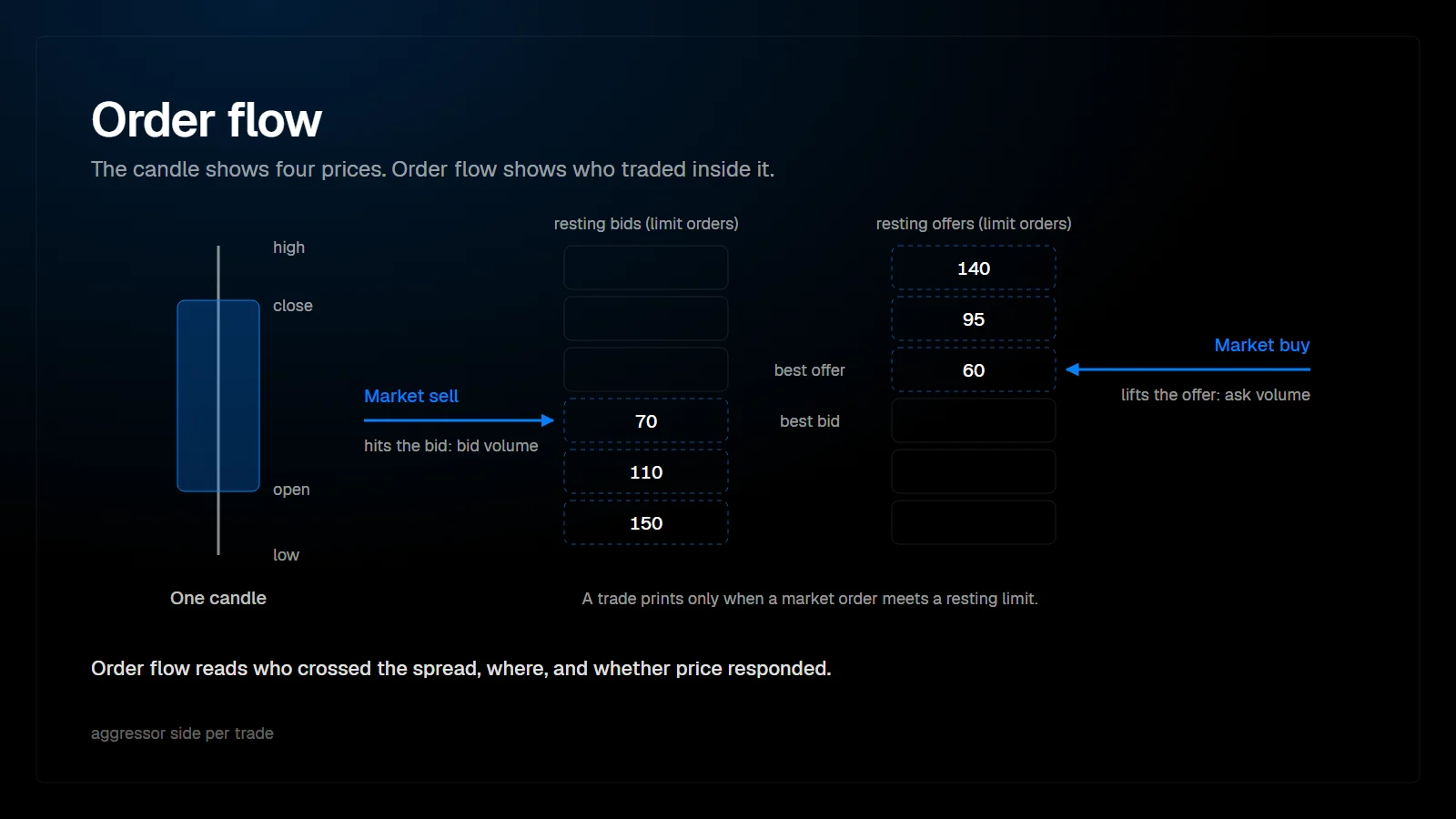 by Phil Wasmuth6 min readWhat Is Order Flow Trading? A Guide for ES and NQOrder flow trading explained for ES and NQ futures: aggressive vs. passive orders, the tape, DOM, footprint and delta, and how traders read them in context.
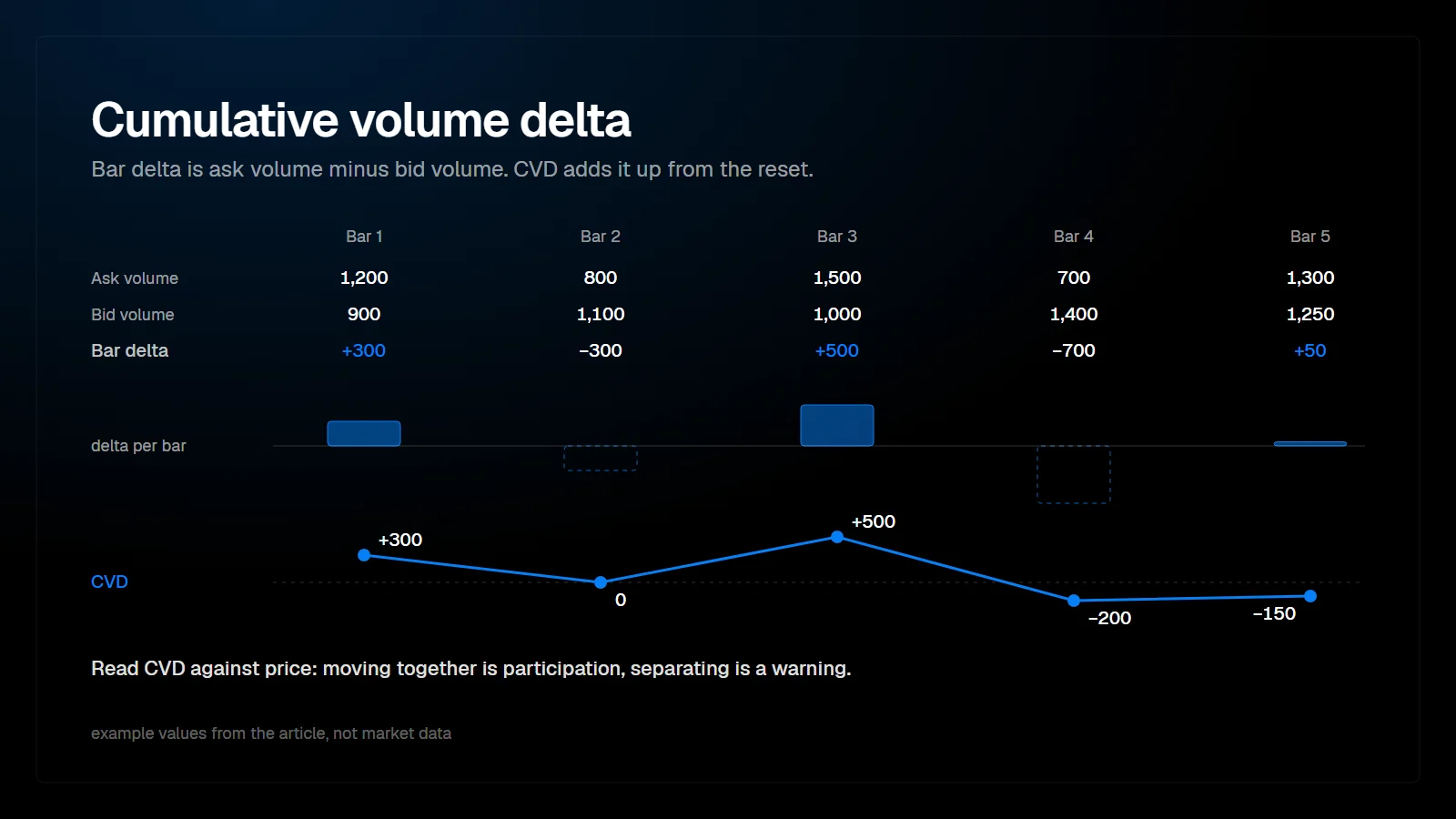 by Phil Wasmuth5 min readCumulative Volume Delta (CVD) ExplainedCumulative volume delta explained: how CVD is calculated from bid and ask volume, when to reset it, and how to read CVD divergence on ES and NQ futures charts.
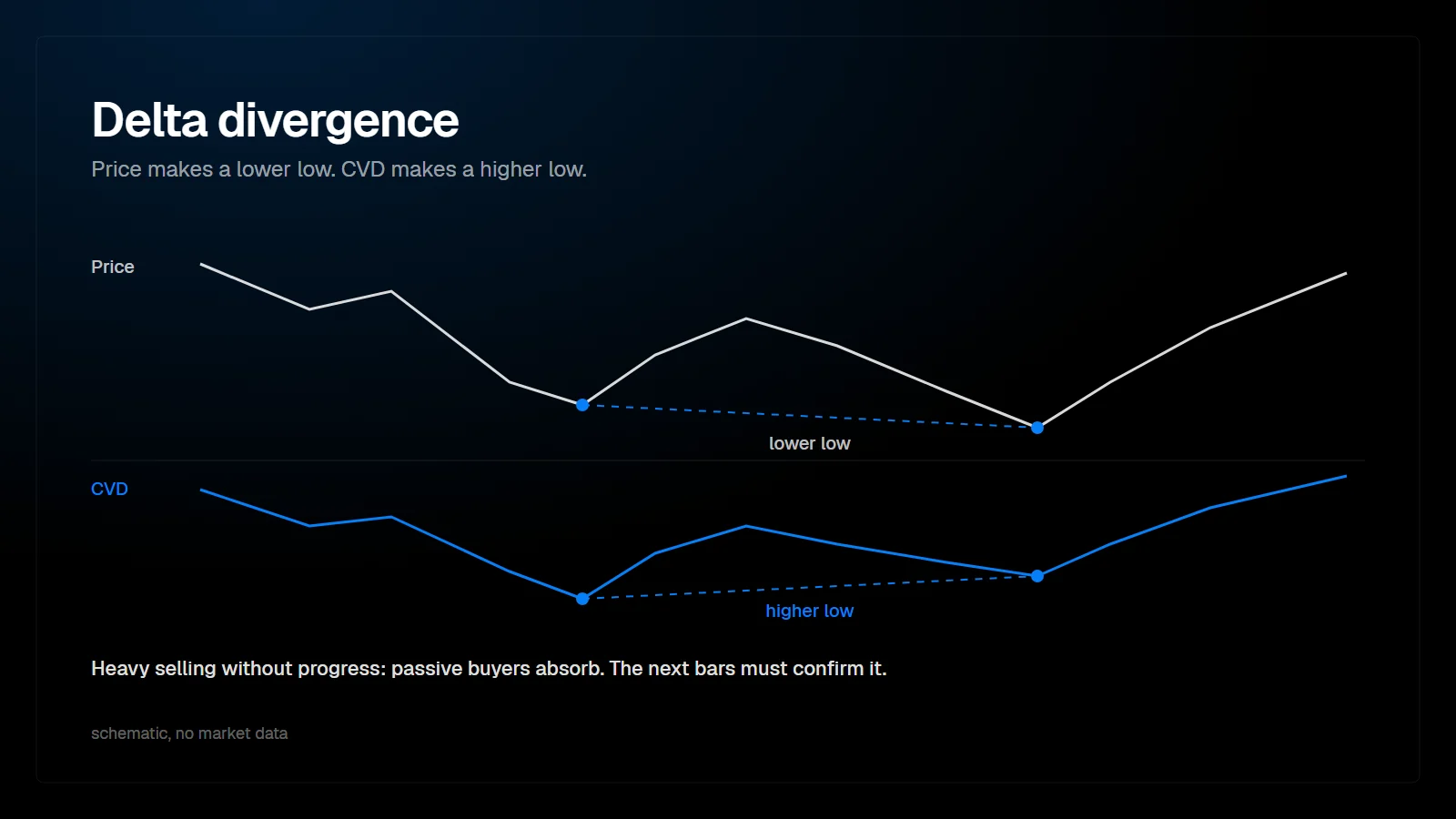 by Phil Wasmuth5 min readDelta Divergence: Reading Absorption in Order FlowDelta divergence explained: why heavy selling without lower prices signals absorption, how to spot it on footprint and CVD, and how to confirm it at key levels.
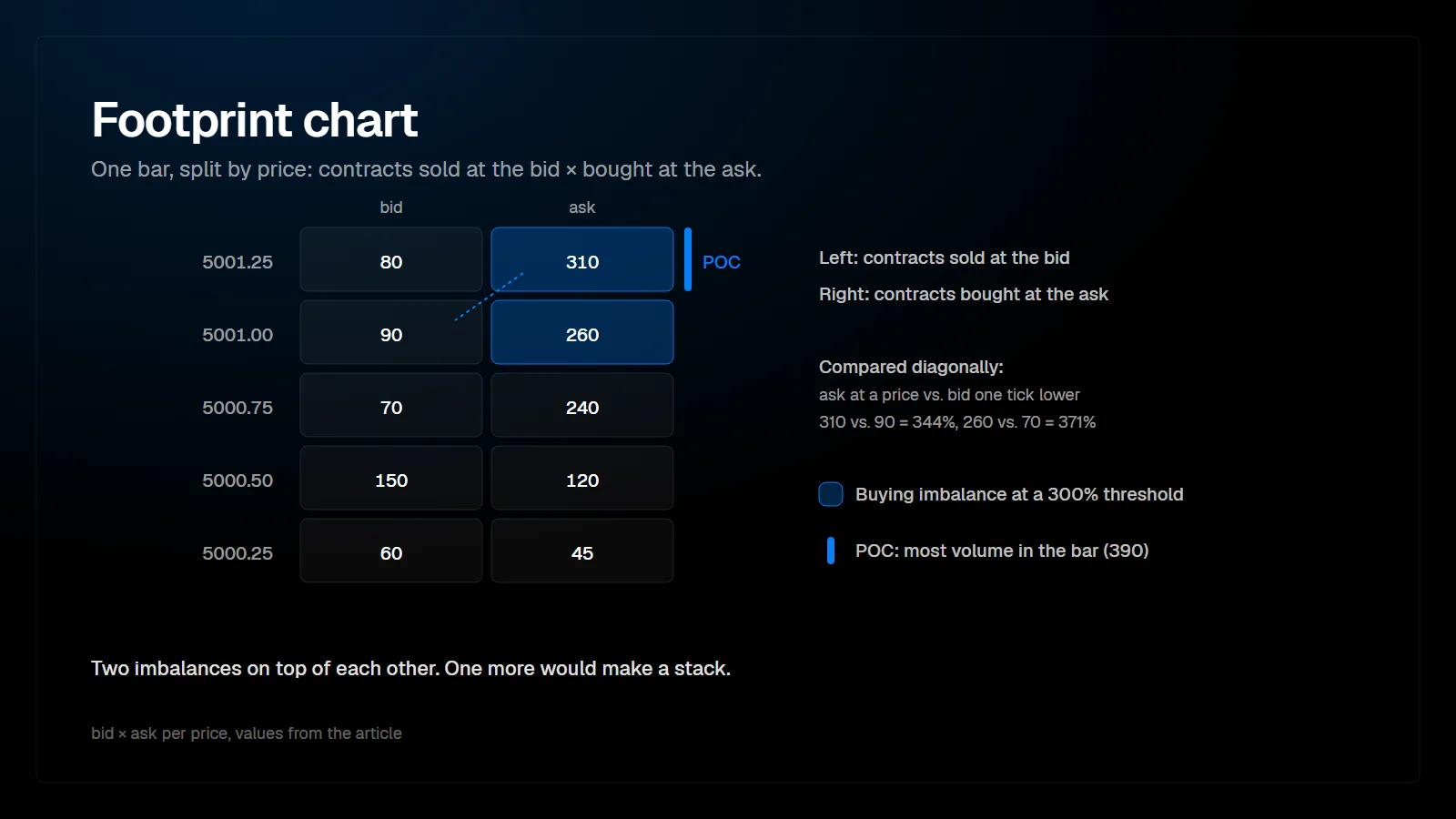 by Phil Wasmuth7 min readFootprint Charts Explained: Bid/Ask and ImbalancesFootprint charts explained: how to read bid x ask numbers, delta and volume modes, diagonal and stacked imbalances, and unfinished auctions on futures charts.
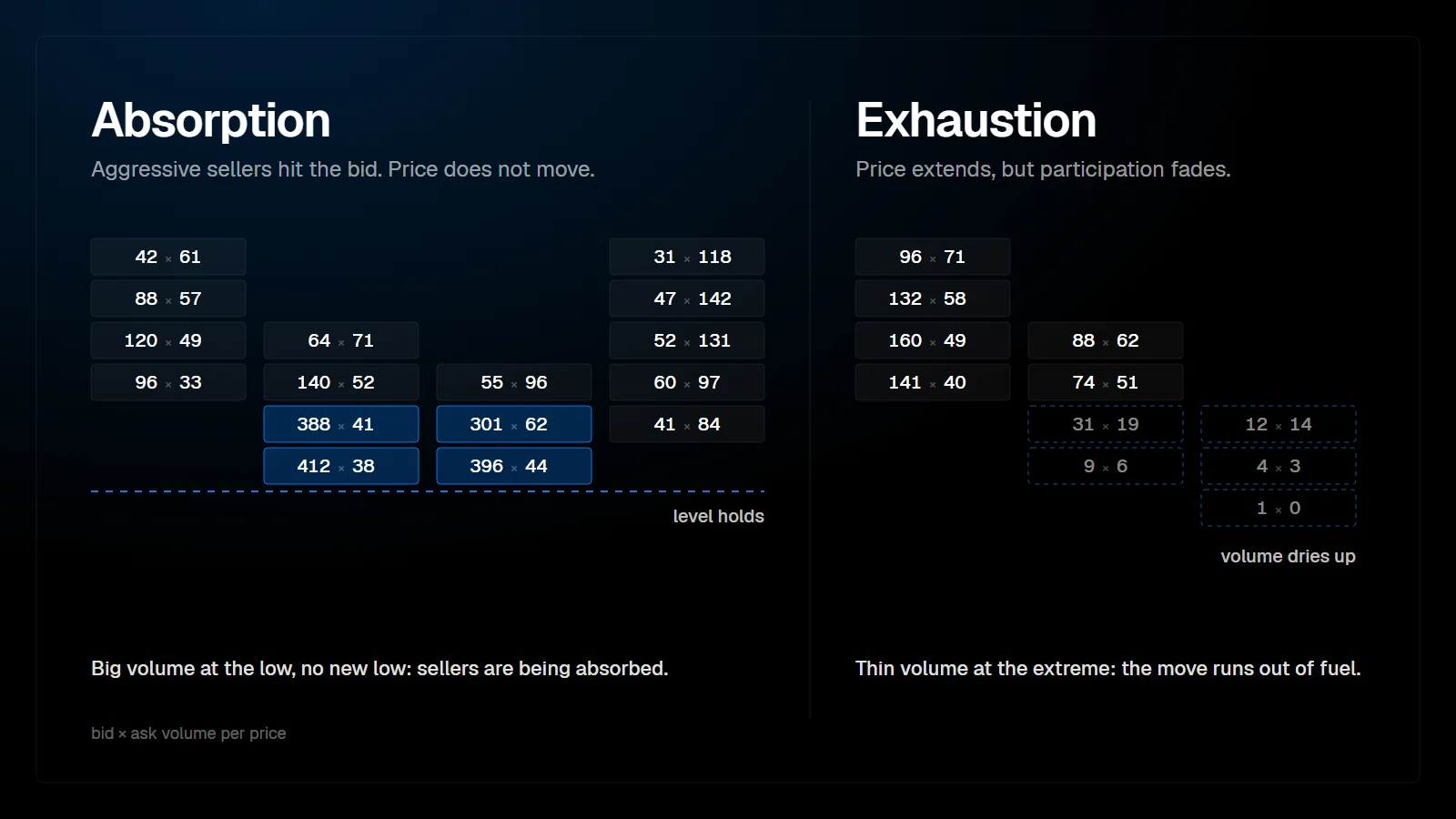 by Phil Wasmuth5 min readAbsorption vs. Exhaustion in Order FlowAbsorption vs. exhaustion in order flow: how heavy volume without progress differs from a move that runs out of buyers or sellers, with footprint signatures.
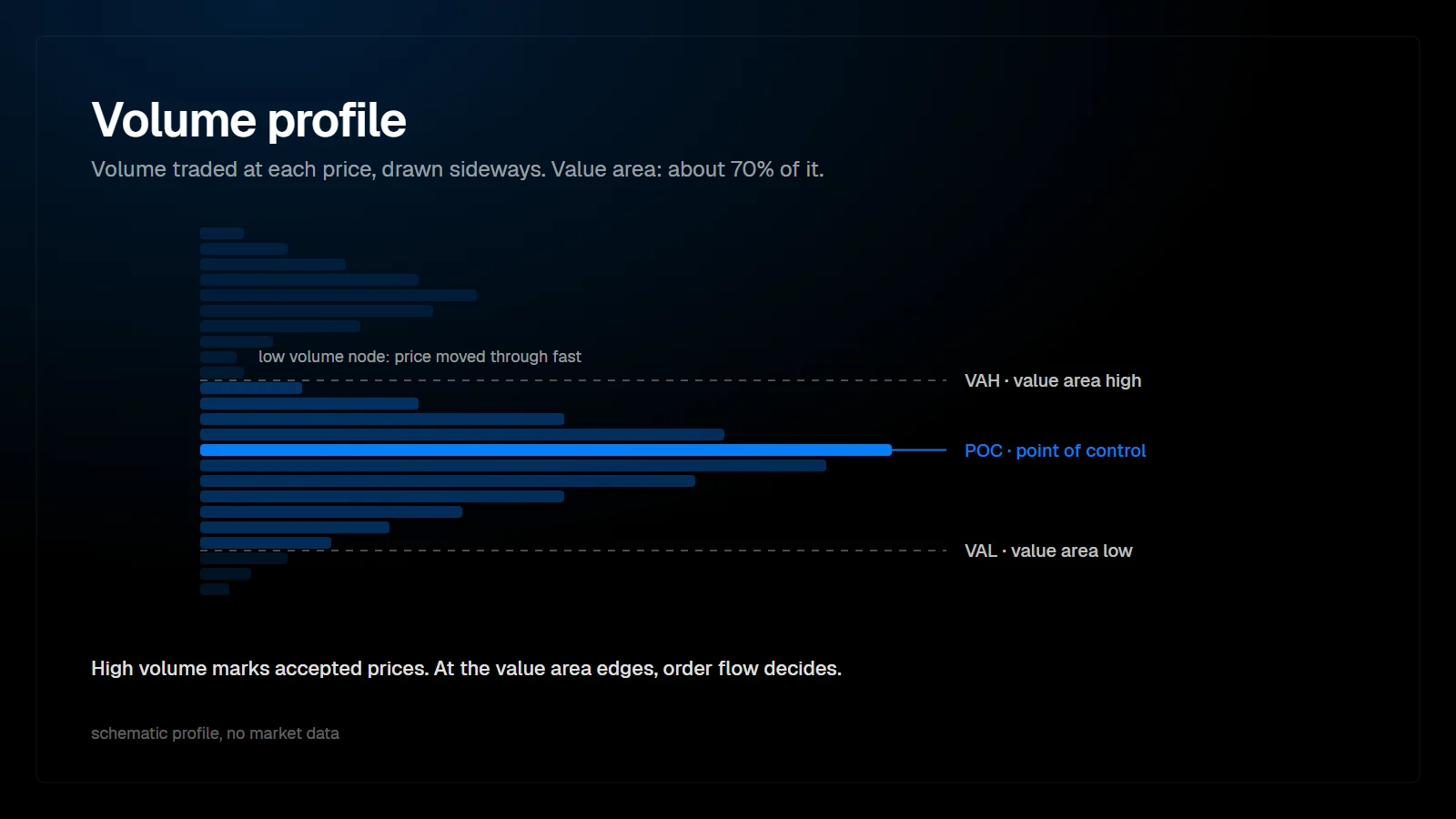 by Phil Wasmuth5 min readVolume Profile, POC and Value Area for FuturesVolume profile explained for futures traders: point of control, value area high and low, high and low volume nodes, and session vs. composite profiles.
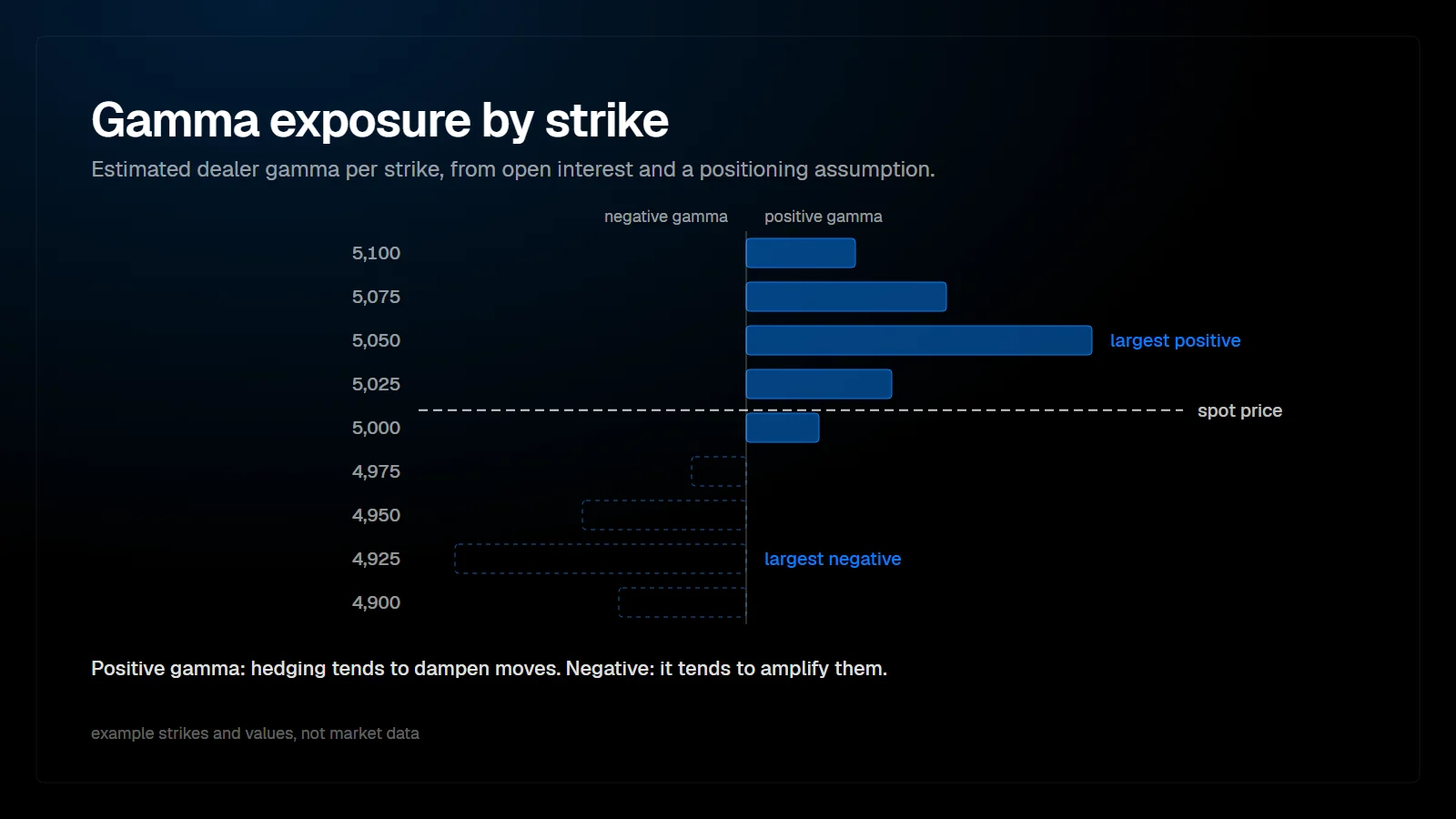 by Phil Wasmuth5 min readGamma Levels Explained: What GEX Means for ES and NQGamma exposure (GEX) explained for futures traders: how dealer hedging creates gamma levels, positive vs. negative gamma, and how levels map to ES and NQ.
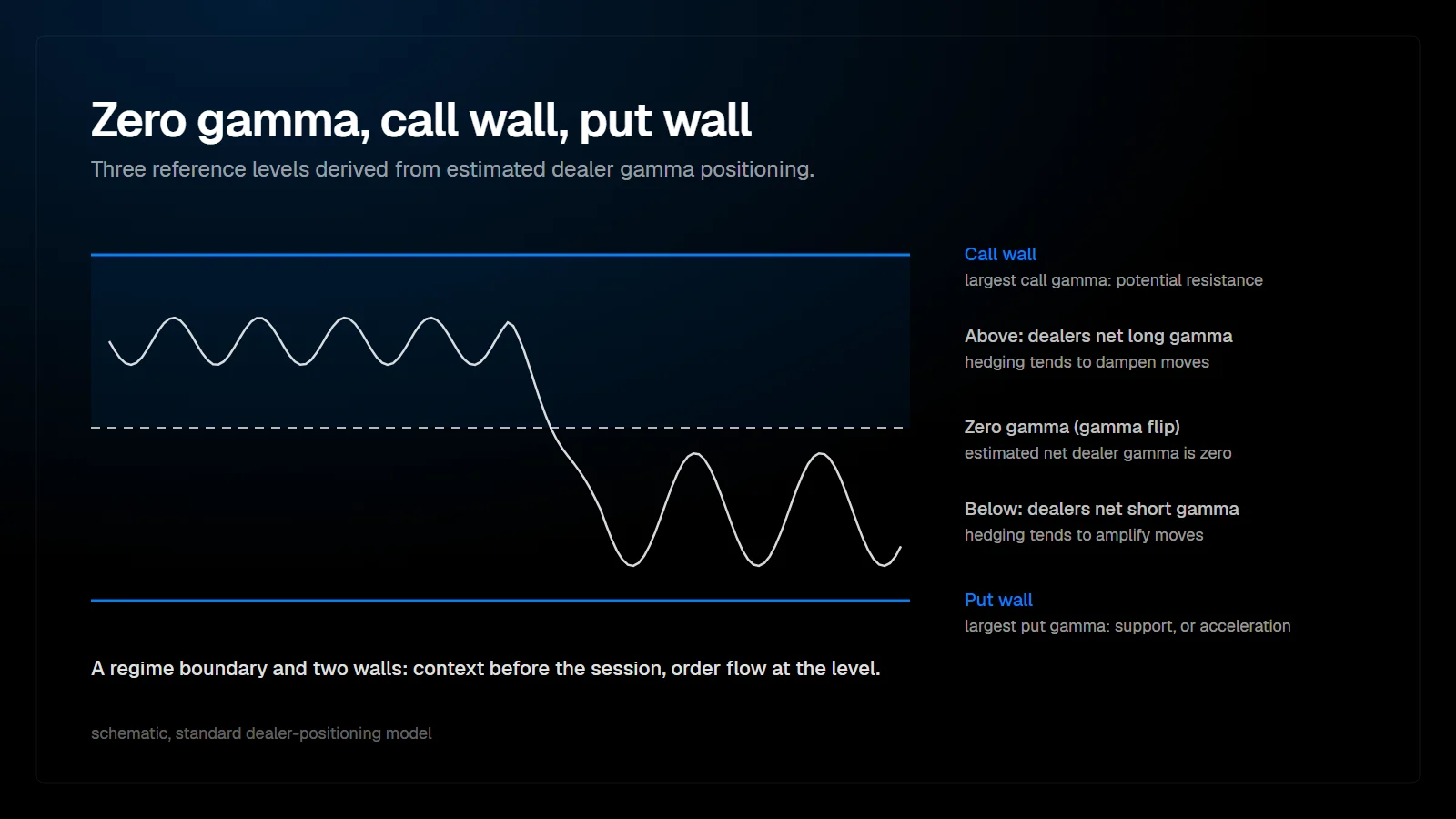 by Phil Wasmuth5 min readZero Gamma, Call Wall and Put Wall ExplainedDealer positioning explained: what zero gamma, the call wall and the put wall are, how they are derived, and how ES and NQ traders read them against order flow.
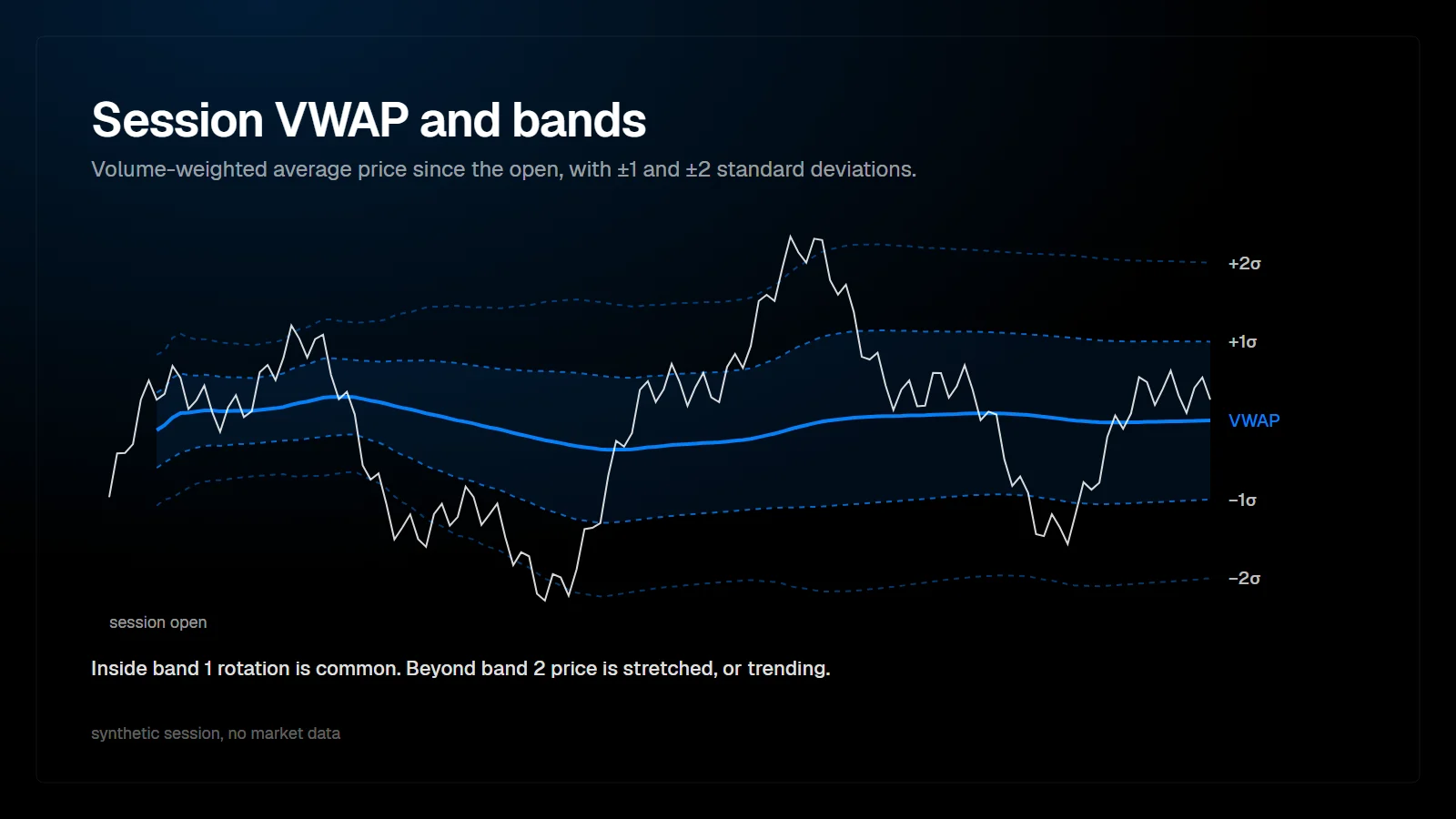 by Phil Wasmuth5 min readVWAP for Futures Day Trading: Session VWAP and BandsVWAP for futures day trading: how session VWAP is calculated, Globex vs. RTH anchoring, standard deviation bands and anchored VWAP for ES and NQ traders.
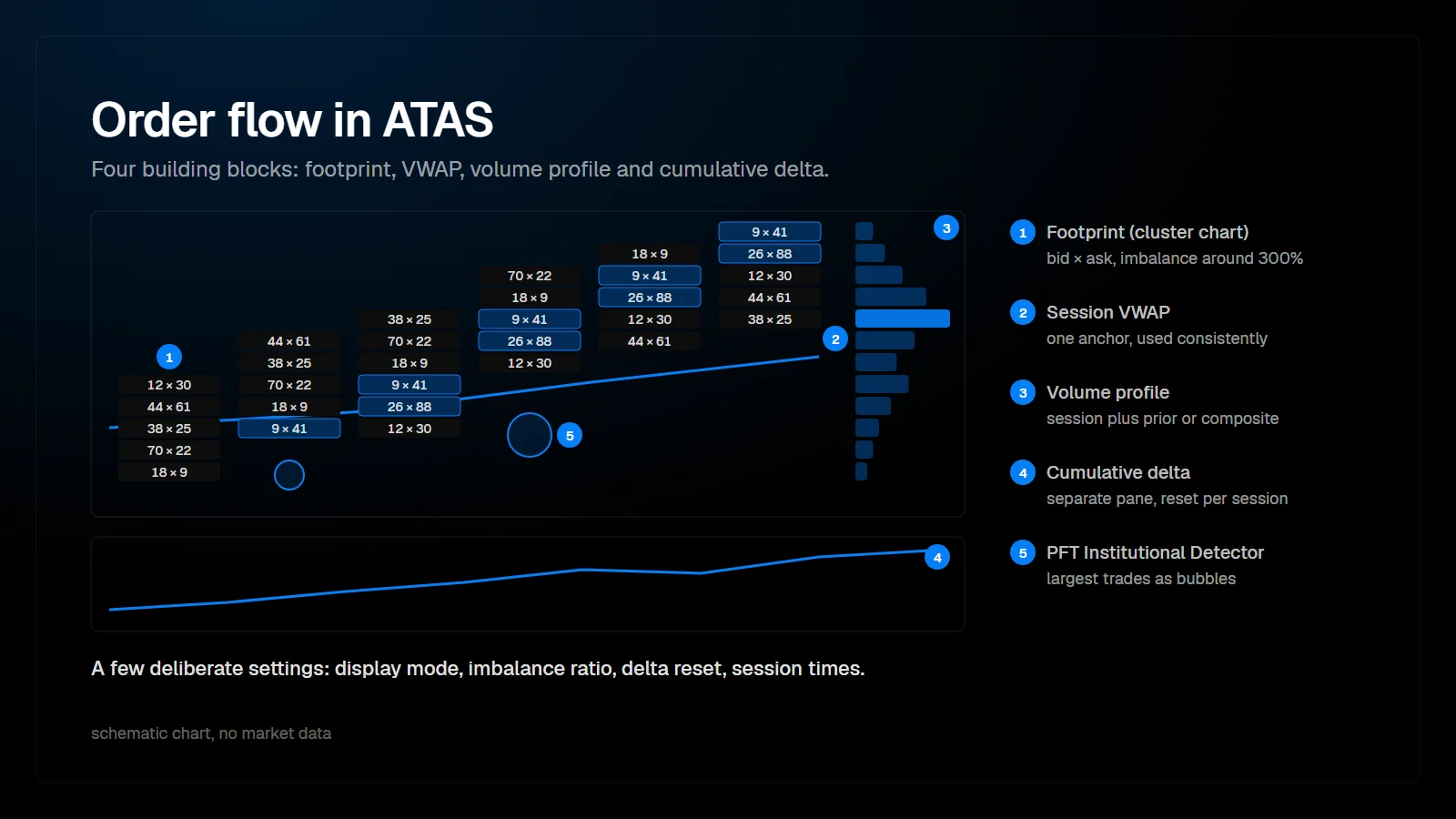 by Phil Wasmuth5 min readHow to Set Up Order Flow Tools in ATASHow to set up order flow tools in ATAS: footprint (cluster) chart, imbalance settings, cumulative delta, volume profile and VWAP, and where PFT indicators fit.
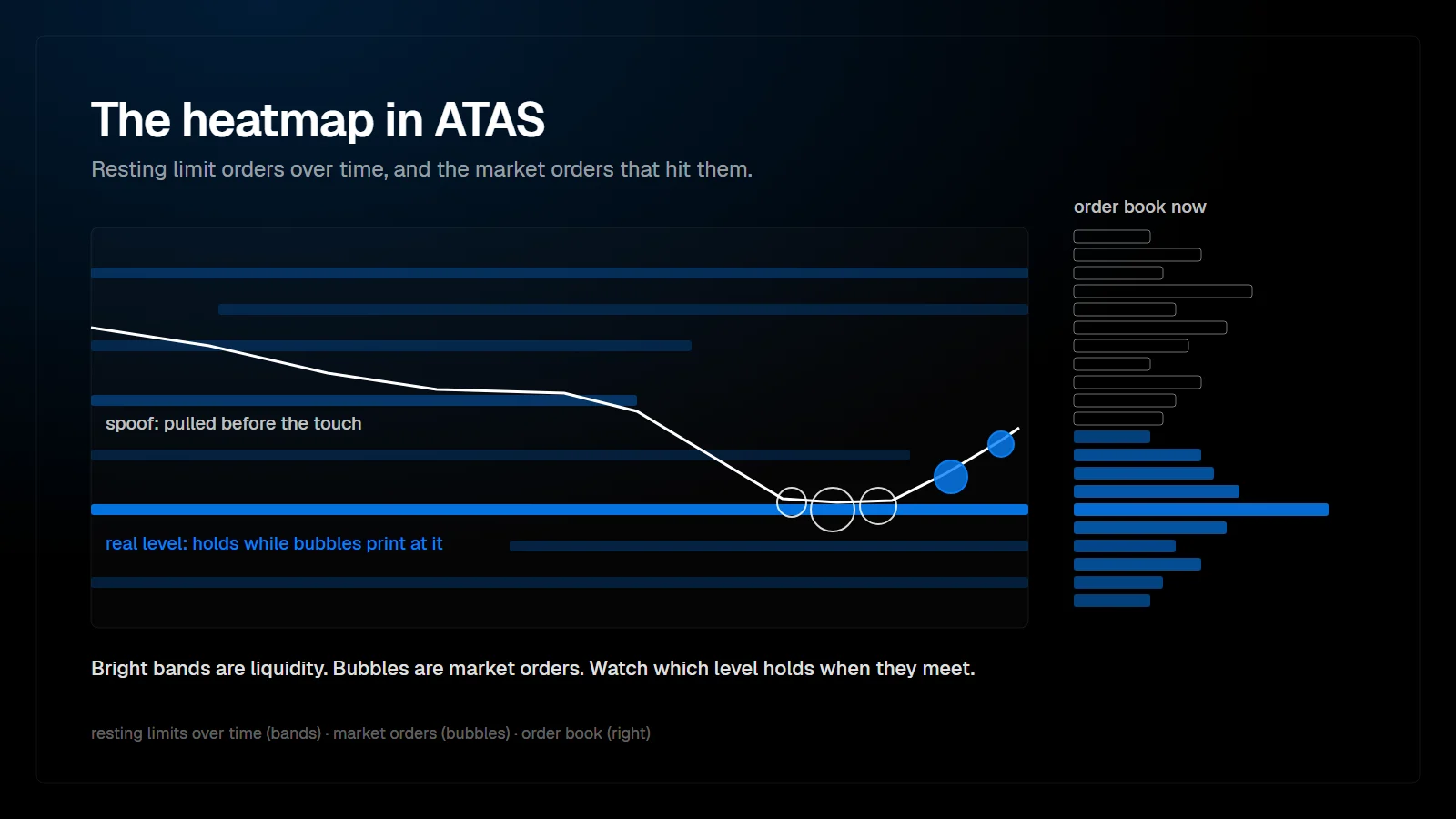 by Phil Wasmuth10 min readWhat Is the Heatmap in ATAS? Liquidity, Aggression and SetupThe ATAS Heatmap explained: resting limit orders over time, trade bubbles, key settings, spoofing, and how to read aggressive vs. passive traders to qualify breakouts.
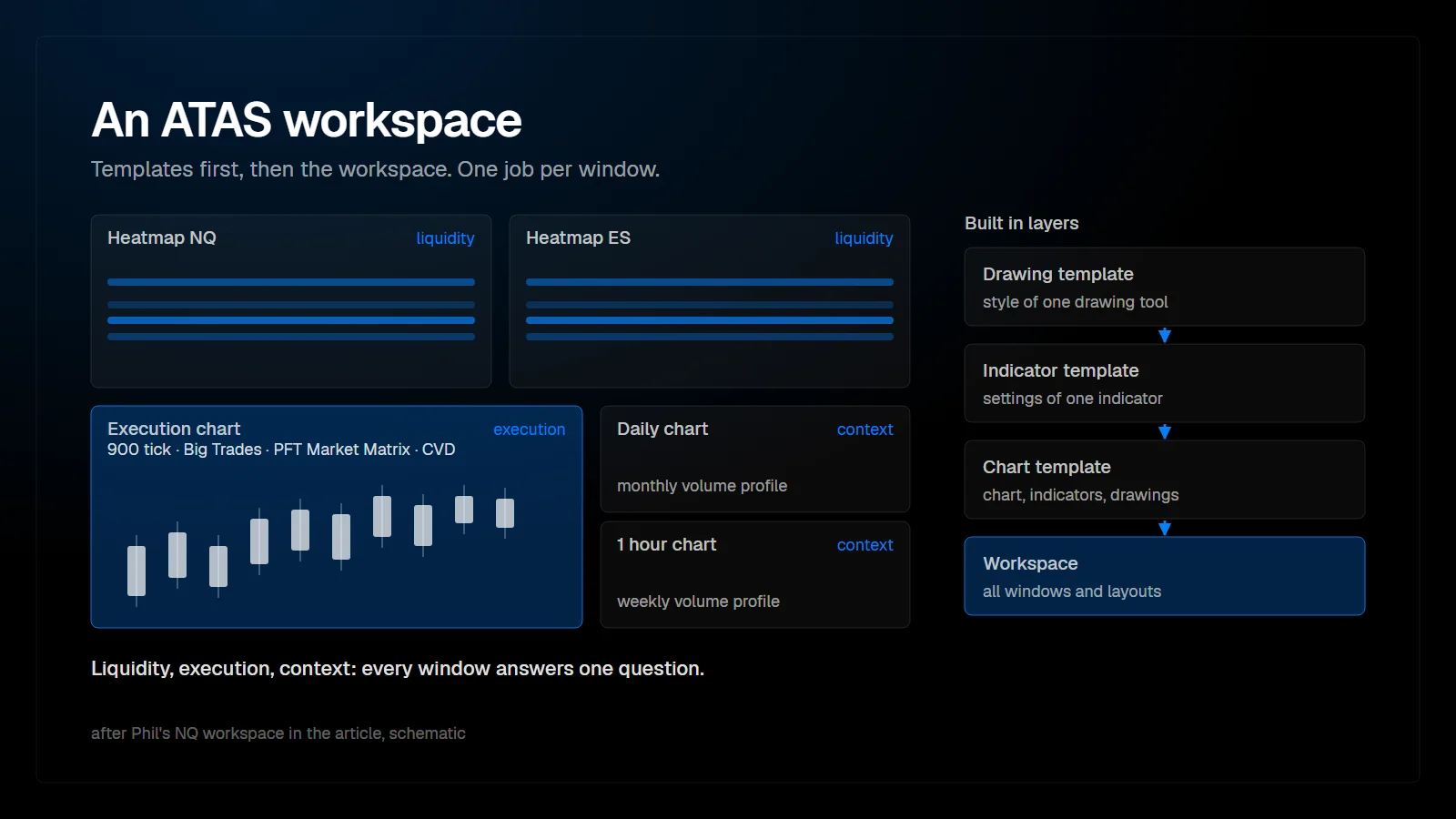 by Phil Wasmuth6 min readHow to Set Up a Workspace in ATASHow to set up an ATAS workspace: drawing, indicator and chart templates, saving and sharing workspaces in ATAS X, and the NQ workspace Phil uses after seven years.
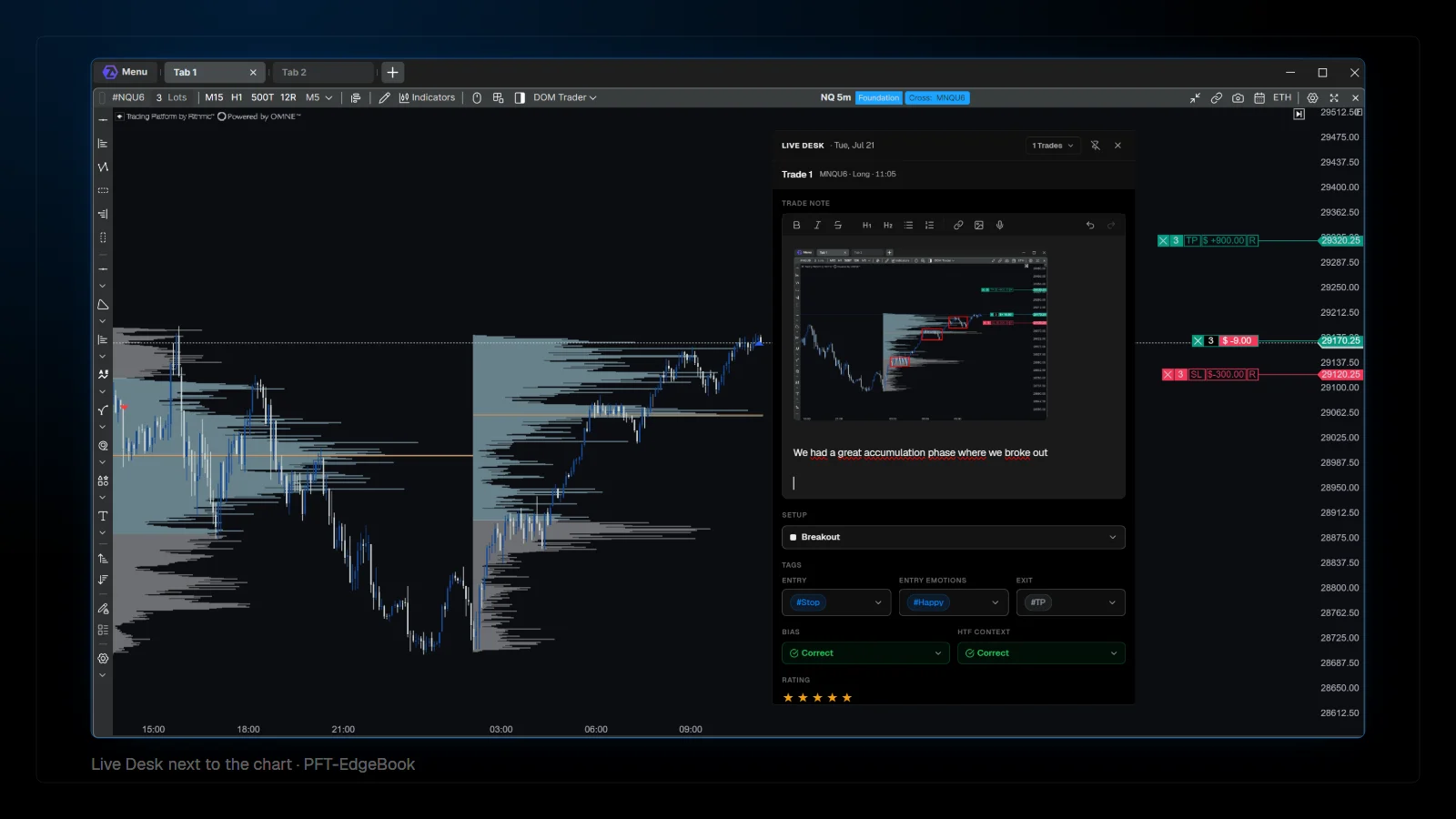 by Phil Wasmuth6 min readWhy Journaling Matters, and How PFT-EdgeBook Is DifferentWhy a trading journal matters, why to journal while the trade is open, and how PFT-EdgeBook records trades live from ATAS with MAE/MFE, post-exit data and screenshots.
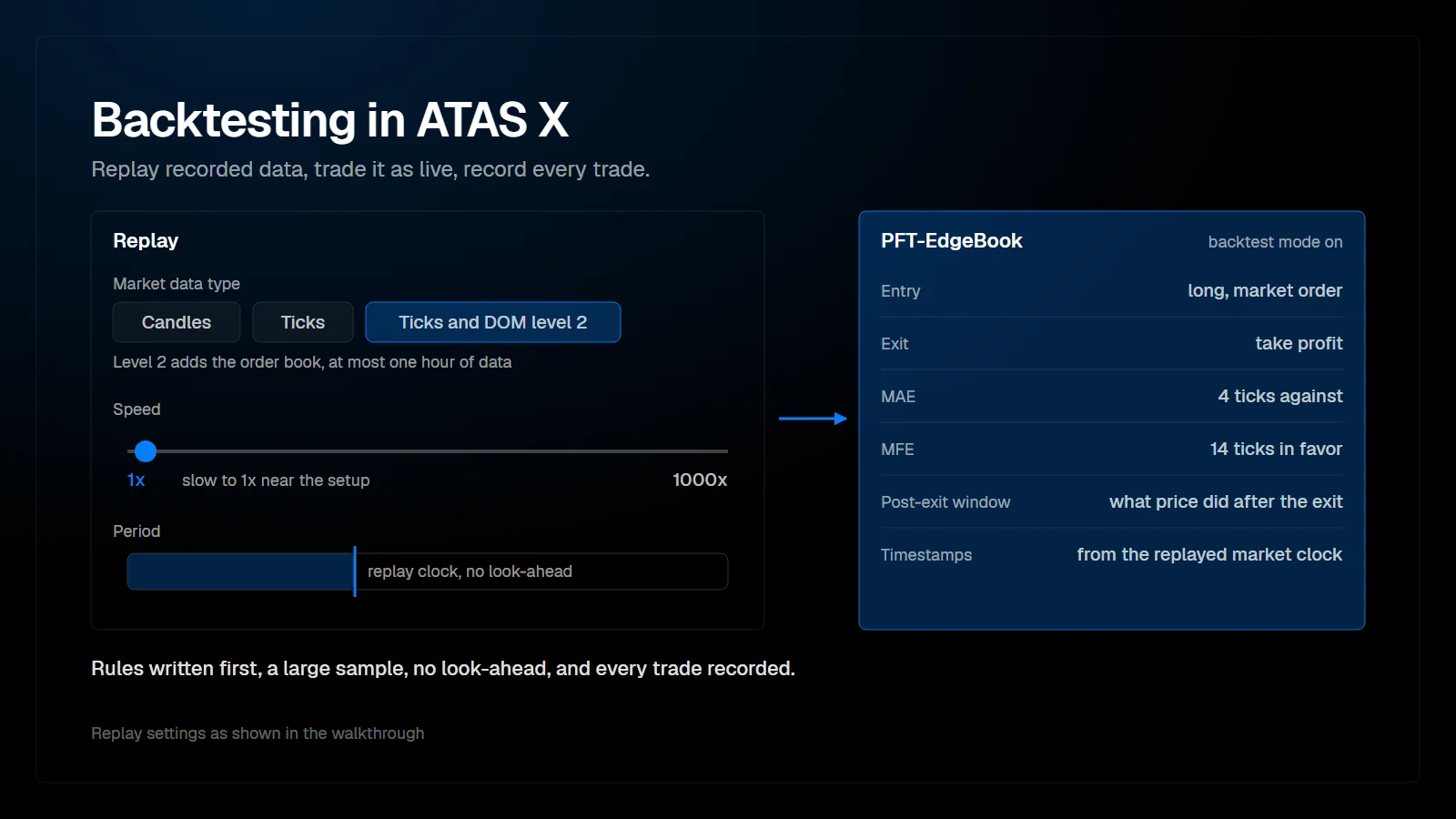 by Phil Wasmuth5 min readHow to Backtest Properly in ATAS XHow to backtest in ATAS X: the Replay widget, data types, level 2 limits and speed, the rules of honest backtesting, and recording replay trades with PFT-EdgeBook.